Hamed Seyed-Allaei
Physicist. I build models you can play with.
Hi, I'm Hamed, a physicist. I love little simple things that have huge, unexpected impacts, and I love to share them with the world, like this simple little fair game and its surprising results.
If you think “fair and square” makes our world a slightly better place to live, a small gift warms my heart, and big ones warm my home. Both encourage me to do more.
I build models you can play with. Would you like me to play with yours?
Behind these squares: physics, neuroscience, years of teaching, data science, machine learning and AI.
Ai / ∑Aj = si
Wealth as area. The squares keep trading, packed together. Each square's area is proportional to its wealth: its fraction of the total coloured area is its share of the money. Gaps between squares are not money.
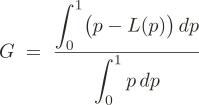
The Gini. The squares line up, poorest first, and pull out into stairs; the curve through their corners is L. The area between the straight line and the curve, over the area under the line.
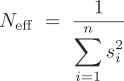
The effective number. Each square's side is its share, si. The box holds about three copies of the pile: as concentrated as three equal squares.
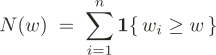
Who has at least. Everyone becomes a bar, longer on a log scale the more they have. Slide the line: N(w) counts the bars that reach it.